A Love Supreme John Coltrane Pdf Editor Average ratng: 4,6/5 2125 reviews
Sep 07, 2015 John Coltrane - A Love Supreme (Festival de Jazz de Antibes, 1965) - Duration. The Yarbirds: For Your Love ( Todd Terje re-edit) - Duration: 8:24.
John Coltrane. Evening Standard/Getty Images recorded A Love Supreme in December of 1964 and released it the following year. He presented it as a spiritual declaration that his musical devotion was now intertwined with his faith in God. In many ways, the album mirrors Coltrane's spiritual quest that grew out of his personal troubles, including a long struggle with drug and alcohol addiction. From the opening gong and tenor saxophone flutter, a four-note bass line builds under the sound.
This simple riff becomes the musical framework for the rich improvisations that comprise John Coltrane's 33-minute musical journey. I couldn't wait to go to work at night. It was just such a wonderful experience. I mean, I didn't know what we were going to do. We couldn't really explain why things came together. McCoy Tyner 'I remember they cut the lights down kind of,' says McCoy Tyner, who played piano on A Love Supreme as a member of Coltrane's band in the early and mid-'60s. 'The lights were dimmed in the studio.
I guess they were trying to get a nightclub effect or whatever. I don't know if it was John's suggestion or whatever. I remember the lights being dimmed.' It made sense to try to imitate the dim-lighted intimacy of a club during the studio recordings, he says, because it was on stage during live shows where the quartet would explore, practice and rehearse new material. He says there was an amazing unspoken communication during the 'Love Supreme' sessions.

In fact, he says, Coltrane gave very few verbal directions. Tyner calls the album a culmination and natural extension of chemistry honed through years of playing together live. 'You see, one thing about that music is that it showed you that we had reached a level where you could move the music around. John had a very wonderful way of being flexible with the music, flexing it, stretching it. You know, we reflected that kind of thing. He gave us the freedom to do that. We thought of something, 'Oh, then we'll play it,' you know?
And he said, 'Yeah, I have a feeling'—you know? And all that freedom just came together when we did that record.'
It was that free-wheeling openness which allowed the musicians—Coltrane, Tyner, along with drummer Elvin Jones and bassist Jimmy Garrison—to build a complex four-part suite around a relatively basic musical idea. Lewis Porter heads the masters program in jazz history and research at Rutgers University-Newark. He's the author of John Coltrane: His Life and Music. Porter says that simple idea culminating in the first movement with an unprecedented verbal chant by Coltrane forms the foundation of the entire suite. It's a theme Coltrane consciously uses in subtle and careful ways throughout A Love Supreme.
For example, toward the end of part one, 'Acknowledgement,' Coltrane plays the riff in every key. NPR 100 Fact Sheet Title: A Love Supreme Artist: John Coltrane Reporter: Eric Westervelt Producer: Jeff Rogers Editor: Jeff Rogers Length: 00:12:58 Interviewees: McCoy Tyner (DAT on way to HQ) Prof. Lewis Porter (DAT on way to HQ) Bishop Franzo Wayne King Recordings Used: 'A Love Supreme' 'Coltrane's more or less finished his improvisation, and he just starts playing the 'Love Supreme' motif, but he changes the key another time, another time, another time. This is something very unusual. It's not the way he usually improvises. It's not really improvised.
It's something that he's doing. And if you actually follow it through, he ends up playing this little 'Love Supreme' theme in all 12 possible keys,' says Porter. 'To me, he's giving you a message here. First of all, he's introduced the idea. He's experimented with it. He's improvised with it with great intensity. Now he's saying it's everywhere.
It's in all 12 keys. Anywhere you look, you're going to find this 'Love Supreme.' He's showing you that in a very conscious way on his saxophone.
So to me, he's really very carefully thought about how he wants to present the idea.' While A Love Supreme is a recognized musical masterpiece, it had enormous personal significance for Coltrane. In the spring of 1957, his dependence on heroin and alcohol lost him one of the best jobs in jazz. He was playing sax and touring with ' popular group when he became unreliable and strung out. Alternately catatonic and brilliant, Coltrane's behavior and playing became increasingly erratic. Davis fired him after a live show that April.
Soon after, Coltrane resolved to clean up his act. He would later write, in the 1964 liner notes to A Love Supreme, 'In the year of 1957, I experienced, by the grace of God, a spiritual awakening, which was to lead me to a richer, fuller, more productive life.' But Coltrane didn't always stay the clean course.
As he also wrote in the album's notes, 'As time and events moved on, I entered into a phase which is contradictory to the pledge and away from the esteemed path. But thankfully now, through the merciful hand of God, I do perceive and have been fully reinformed of his omnipotence. It is truly a love supreme.' The album is, in many ways, a reaffirmation of faith.
And the suite lays out what you might call its four phases: 'Acknowledgement,' 'Resolution,' 'Pursuance' and 'Psalms.' A Love Supreme has even spawned something of a religious sect. Reverend Franzo Wayne King is pastor of the Saint John Coltrane African Orthodox Church in San Francisco. The congregation mixes African Orthodox liturgy with Coltrane's quotes and a heavy dose of his music. Pastor King calls the album the cornerstone of his 200-member church. 'When you look at the composition of titles and the sequence in which John has them laid out, we say that there's formula in that album. When he says, 'Acknowledgements, resolutions and pursuance,' it's like saying, 'Father, Son and Holy Ghost.'
It's like saying, 'Melody, harmony and rhythm.' In other words, you have to acknowledge and then you resolve and then you pursue, and the manifestation of it is a love supreme.' While it's unknown whether Coltrane would have wanted to be worshiped or have his art deified, it's clear in every way that he saw A Love Supreme as much more than just another recording. Coltrane took control of every detail of the album, unlike any of his other works, including writing the liner notes and an accompanying poem. The poem, it's been discovered, is written to match the slow music of the fourth movement, 'Psalms.'
It's a connection Coltrane hints at cryptically in the liner notes. Pastor King remembers the day his congregation made the discovery. 'It was so funny. We were here. We had been collected as a community, and we used to just read it and try to put some passion in it, you know. And then one day, we were reading the album, because he said the last part is 'Psalms,' which is in context, written context. And we said, 'Well, what is he trying to say here?'
And then we put it on and sang, 'A love supreme. I would do all I can to be worthy of you, oh, Lord.' It's kind of like Pentecostal preaching, you know,' Pastor King says. 'We had a great day. We woke up and found out that the music and the words went together, and that was like a further encouragement that John Coltrane was, indeed, you know, sent by God and that that sound had really jumped down from the throne of heaven, so to speak.' While Pastor King sees explicit Christian symbolism in A Love Supreme, others point out that Coltrane took a much more general view. Coltrane was careful to say that while he was raised Christian, his searchings had led him to realize that all religions had a piece of the truth.
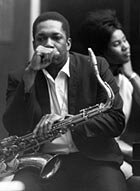
Only once did Coltrane perform the entire 'Love Supreme' suite live, and there are no recorded interviews in which he talks about the album's personal significance. In fact, Coltrane didn't even talk about it with his band mates. 'We didn't talk about a lot of things,' says Tyner. But he does say the band knew that A Love Supreme had unique chemistry.
Usb to serial driver. BE AWARE THIS IS A SCAM.!!
'He told me, he says, 'I respond to what's around me,' remembers Tyner. 'That's the way it should be, you know? And it was just—I couldn't wait to go to work at night.
It was just such a wonderful experience. I mean, I didn't know what we were going to do. We couldn't really explain why things came together so well, you know, and why it was, you know, meant to be. I mean, it's hard to explain things like that.'
If you only own the original studio release of John Coltrane’s “A Love Supreme” (recorded on December 9, 1964, and issued in February, 1965), then the new three-disk release “A Love Supreme: The Complete Masters” of the classic album by Coltrane’s classic quartet will be a revelatory experience. It’s a revelation because of one particular set, one that many Coltrane fans have heard before: the live performance by the quartet from Juan-les-Pins, France, on July 26, 1965, of the entire suite of “A Love Supreme.” This set was also included the “deluxe” two-disk edition of “A Love Supreme,” issued by Impulse!
Records, in 2002. By making that performance readily available to the general listener, Impulse! Sparked a major advance in the appreciation, the understanding—and the love—of “A Love Supreme.” The merits of that recording shed particular light on the importance—and, strangely, the limits—of the original studio recording of “A Love Supreme.” The new release, “The Complete Masters,” also includes additional, previously unreleased material that, though intermittently excellent, isn’t essential. These nine previously unreleased tracks add up to thirty-five minutes of music—sort of. Two of those tracks are mono dubs of the last two movements (the second side) of the original LP issue, made not for release but for Coltrane’s reference.
One track is the entirety of the last movement, “Psalm,” exactly as originally released except for the last half-minute, which is heard without the overdubs included in the released version. Two tracks feature the last two minutes of the first movement, “Acknowledgement,” as released but with different overdubs of Coltrane’s chanting of the phrase “A love supreme.” Only four tracks, running a total of twenty-three minutes, offer previously unheard performances—two complete takes of “Acknowledgement” as played by a sextet that also includes a second tenor saxophonist, Archie Shepp, and the bassist Art Davis, and two takes that break off quickly. The 2002 set was noteworthy for its inclusion of two takes by that larger group, which had never been released in any format.
Coltrane, in his liner notes to the original album, alluded to the existence of a “track” featuring Shepp and Davis. They were something of a holy grail for Coltrane-philes (as a fan of Shepp’s as well, I had my own curiosity aroused from the time I bought the album, around 1974)—and the 2002 release of those two takes made clear why Coltrane decided not to include them. The band didn’t quite mesh; the rhythms were a little stiff, the interaction between the two saxophonists was somewhat tentative. Shepp, whose guitar-like attack and buzzsaw tone brings an urban-blues edge to his complex modernism, doesn’t cut loose any more than Coltrane does. The context, like a garment that pinches in some places and bags in others, sounds inhibiting to both saxophonists.
The two extra complete takes of the sextet included in the new reissue are better than the ones that were formerly available, especially because of Coltrane’s playing. In the last and longest take, he builds his solo slowly until, for a minute or so, he tosses a thematic fragment back and forth to himself in a sort of spontaneous, high-speed, trance-like architecture. It’s a wonderful moment. Yet it’s hard to justify a release that adds a disk—and nearly doubles the price—for the sake of two fine but brief solos by Coltrane, two by Shepp, and thirty un-overdubbed seconds. As completism goes, it’s an archivists’ delight. For a music lover who already has the earlier “deluxe” edition, the new set is a true luxury. The release may be good business, but it’s a distraction from the record company’s bully pulpit to extend the legacy of Coltrane, one of the greatest and most important musicians ever to record and to perform.
There are two—or, rather, three—superimposed layers to the chronology of a musician’s career. There’s the time when recordings are made; the time when they’re released; and the concert performances that were given, most of which are unlikely to be recorded and made available as commercial releases in step with the artist’s career. A listener who followed Coltrane’s career as it unfolded through commercially available recordings might well find “A Love Supreme” to be a great advance, in its solos as well as its unity of tone and intricacy of quartet interplay. And if such a listener had then heard Coltrane in concert, the experience would have been a shock, because of the length, intensity, complexity, the sheer power and fury of performances in clubs. That shock is delivered by the French concert performance of “A Love Supreme.” Unlike most jazz improvisers, Coltrane was used to playing, on his own, at lengths comparable to that of an entire album. In clubs, he played solos that ran an hour or more, and Elvin Jones recalled Coltrane once soloing for three straight hours. There’s an astonishing private taping of the second movement of “A Love Supreme,” titled “Resolution,” recorded at a club called Pep’s, in Philadelphia, on September 18, 1964.
It’s a half-hour long (and in dim sound), and it features Coltrane in two solos, one that’s five minutes long and the other that runs nine minutes, and both of them reach ecstatic and frighteningly intense crescendos, in phrases that sound like a soul baring itself to the universe. By contrast, on the studio recording of “A Love Supreme,” Coltrane simplifies, clarifies, abbreviates, and moderates his solos.
The album profoundly conveys the sheer beauty, the clarity and purity of Coltrane’s sound; the exalted concentration reflected in the band’s free and spontaneous unity—a unity of purpose as well as of musical conception; and the quasi-symphonic unity of the four movements, one grand composition in four parts. “A Love Supreme” isn’t merely a collection of performances. It’s both one unified composition and, in effect, a concept album. And the core of that concept is more than musical—it’s the spiritual, religious dimension. The devotion reflected in “A Love Supreme” is explicitly cited by Coltrane in his original notes to the album, which include his poem, “A Love Supreme.” In his liner notes, Coltrane explains that “the fourth and last part is a musical narration of the theme, ‘A LOVE SUPREME’ which is written in the context; it is entitled ‘PSALM’.” As the music historian Lewis Porter famously noted, Coltrane meant something very specific: that Coltrane’s saxophone solo in that section is the nearly word-by-word setting of that poem. That sense of sacred fervor and reverent yearning suffuses “A Love Supreme.” The album’s unity of tone, mood, thought, and philosophical contemplation matches its organic musical flow. The album is an idea, an abstraction, a sublime idealization of Coltrane’s religious philosophy.
It has an air of autobiographical reflection and personal confession—one that’s emphasized by his liner notes, in which he cites 1957 as the year of his “spiritual awakening” and alludes to his subsequent spiritual trials. In the studio, there’s an undertone of serenity and also of composition that emphasizes the movement’s themes, of compression that builds the climaxes of a solo into repeated motto-like phrases or quick outbursts that soon resolve into calmer and more songful perorations. By contrast, the 1965 concert performance from France is full-throated, uninhibited, frighteningly wild and frenzied. It leaves a listener thrilled, shaken, drained; it’s a holy terror and a holy wonder. From the first movement of the live performance, there’s an obsessive, possessed, ecstatic mood to Coltrane’s playing, a sense of spiritual search and struggle.
The jaunty second movement, “Resolution,” finds Coltrane playing with an exciting, keening ferocity, featuring growls and roars, shouts and shrieks of a fury unheard in the studio. Coltrane’s fast-tempo, wildly expressive solo in the concert performance of “Pursuance” is eight minutes and includes a lengthy duet with Jones that, with its blend of unleashed energy and extraordinarily complex construction discovered on the wing, is one of most moving, most beautiful, most soul-searching moments that Coltrane ever recorded.
Herbert Kohl
A Love Supreme John Coltrane Pdf Editor Youtube
The French performance of the final slow movement, “Psalm,” goes quickly off-text to get to the mood of the poem—augmented by the frenetic mood of the moment. There’s no need for overdubs because Coltrane was already playing in tongues, virtually multiplying himself in real time. The studio recording of “A Love Supreme” is the most perfected of Coltrane’s studio recordings with the quartet, the one that exemplifies the ideas and aspirations of the group better than any other. It may be his noblest and purest work, his best work in the moral sense, the one that conveys his finest and highest musical purpose. The concert performance is both more toughly profane and more ecstatically transcendent; it suggests a religious ecstasy that wrestles more mightily with the world and with himself. The studio recording offers the sense of abstraction—it distills much of what Coltrane was doing in concert performances, it suggests it, it signifies it, but the album also domesticates it. It borrows the passions and furies that Coltrane unleashed in concert and renders them consumable at home without terrifying the neighbors or, for that matter, oneself.
This is not to diminish the greatness of “A Love Supreme”—domesticated Coltrane is still wilder, deeper, and more self-demanding than almost anyone else anywhere. Its sense of solidly grounded serenity within inner turbulence is itself awe-inspiring. But if “A Love Supreme” bears the reputation as Coltrane’s best work, then the recordings of Coltrane’s that actually go further, take more chances, offer more exhilarating surprises, and reach more emotional extremes than does “A Love Supreme” are off the charts.
The 2002 Impulse! Release of the concert version of “A Love Supreme” was an exemplary act of devotion to Coltrane’s art and heritage.
So was the Impulse! Release, in 2013, of Coltrane’s, and its magnificent release last year of, from 1966. This year’s reissue of “A Love Supreme” is, above all, a reminder that there’s much Coltrane material of the first order awaiting a proper commercial release. (There are, as Ben Ratliff writes, of unreleased live performances by Coltrane in the record company’s vaults.) For instance, the French concert of “A Love Supreme” had three remarkable follow-ups, in short order—another concert at Juan-les-Pins recorded the next day (July 27, 1965), one recorded in Paris, on July 28th, and another recorded in Belgium, on August 1st, that have never been officially released on CD. There are Coltrane’s thrilling 1961 performances with Eric Dolphy, live from Newport and elsewhere, that exist only as bootlegs, There are superb recordings of the quartet from the Half Note in New York, in 1965, that have yet to be released commercially. And the sonically challenged 1964 recording from Pep’s could benefit from the technical ingenuity of major-label engineers to extract a maximum of information from its troubled tape.
(I can imagine a release that featured the track as recorded and the track as creatively restored.) Any of these, issued by Impulse!, would be far greater contributions to the love and experience of Coltrane’s music, of Coltrane’s world, than the slender new supplements to “A Love Supreme.” The lavish new edition of “A Love Supreme” contributes to the mythology of that album as the pinnacle of Coltrane’s work. It is one treasured manifestation of his genius among many, but it’s not his strongest or most extreme or most self-urging or most visionary work—it’s his most popular one. The history of the reception of “A Love Supreme” at the time of its release is brilliantly unfolded. (Kahn also wrote the superbly detailed notes for the new release.) The ability to catch the zeitgeist, to become indispensable to many people at more or less the same time—and, then, to remain so enduringly for many as well—is no mean feat. Some of the best artists in any field never do so. Others manage to do so at least once, and then spend the rest of their careers living down their success—or, at least, explaining their departure from the work on which their measure of fame rests—in order to advance artistically according to the urgent demands of their own inner lights. That happened to Coltrane; in the few years remaining to him (he died in 1967), he challenged himself more severely and went further, higher, and freer than he had in “A Love Supreme.” The evolution of his musical thought and mode of performance was rapid and radical and quickly left many listeners—and, worse, many critics—struggling to catch up with him.
Love Supreme John Coltrane Poem
Fifty years later, many still have yet to do so. The benefit of hindsight, allowing a listener to mesh the series of official record releases with recorded concerts (as well as with delayed releases of other studio recordings, whether outtakes or full sessions), offers the perspective by which to place “A Love Supreme” aptly in the epochal journey of Coltrane’s art.
It’s an exquisite album that had the virtue of catching on as an album, and that, in catching on, looms oddly large in the foreground and risks blocking the view to greater performances and greater recordings by Coltrane, most of which were unavailable at the time of its original 1965 release. The new and expanded reissue only amplifies that unfortunate effect. In the light of the treasures of Coltrane performances still lying buried in the vaults or in the half-light of bootlegs, the newly added marginalia of “A Love Supreme” further recedes in importance.
