Global Conquest Microplay Manual Transfer Average ratng: 5,0/5 5034 reviews
Key people and (co-founders) Stewart Bell, (designers) Products, (1993-1998) (1998-2001) (2001-2003) Website MicroProse Software Inc. Was an American and founded by and in 1982.
In fact, it was voted 1991's Wargame of the Year by Computer Gaming World. In this fast-paced game of strategic global conquest from award-winning game designer Dan Bunten, you'll control your own superpower as you attempt to outguess and overcome opposing superpowers in World Wars I, II, III IV, and V! You'll allocate your resources and troops. GLOBAL CONQUEST Strategy Game - Microplay 1992 - IBM PC 5¼'HD - Sealed Box. RVF Honda (Atari ST, 1989) in box w/ Manual Microplay.
It developed and published numerous games, many of which are regarded as groundbreaking, classics and cult titles, including starting the and series. Most of their internally developed titles were and games. In 1993, the company lost most of their UK-based personnel and became a subsidiary of. Subsequent cuts and corporate policies led Sid Meier, and leaving and forming in 1996, as MicroProse closed its ex- development studio in. In 1998, following an unsuccessful buyout attempt by, the struggling MicroProse (Spectrum HoloByte) became a wholly owned subsidiary of and its development studios in and were closed the following year. In 2001, MicroProse ceased to exist as an entity and Hasbro Interactive sold the MicroProse to. MicroProse UK's former main office in was closed in 2002, followed by the company's former headquarters in in 2003.
The brand was revived in 2007 when Interactive Game Group acquired it from, formerly Infogrames. The MicroProse brand was licensed to the Legacy Engineering Group for consumer electronics. As of 2010, the MicroProse brand is owned by Cybergun Group. Contents. History Independent company (1982–1993) 1980s In summer 1982, mutual friends who knew of their shared interest in aviation arranged for retired military pilot and computer programmer to meet in.
After Meier surprised Stealey by repeatedly defeating him when playing, he explained that he had analyzed the game's programming to predict future actions and claimed that he could design a better home computer game in one week. Stealey promised to sell the game if Meier could develop it.
Although Meier needed two months to produce Hellcat Ace, Stealey sold 50 copies in his first sales appointment and the game became the first product of their new company. They planned to name it Smugger's Software, but chose MicroProse. (In 1987 the company agreed to change its name to avoid confusion with, but MicroPro decided to rename itself after its word processor).
MicroProse became profitable in its second month and had $10 million in sales by 1986. MicroProse advertised its first batch of games in 1982, under the headline 'Experience the MicroProse Challenge!!!'
All three were written by Sid Meier for the of home computers: platformer Floyd of the Jungle, 2D shooter Chopper Rescue, and first-person airplane combat game Hellcat Ace. The two arcade-style games quickly disappeared, but Hellcat Ace began a series of increasingly sophisticated 8-bit flight simulation games, including (1982) and (1983). MicroProse also released the air traffic control game, written by, in 1985.
Gregg Tavares's Design Team flight jacket By 1987, considered MicroProse as one of the top five computer game companies, alongside, and. As the industry changed over to and CPUs in the latter half of the 1980s, MicroProse started supporting and the -based and. By 1987 the PC market was, along with the Commodore 64, the company's top priority. MicroProse also started a branch in the to cross-publish titles in Europe, and to import some European titles to be published in the United States.
Notable products from this period include simulation games, and, and action-strategy games such as and. Several games from different developers were also distributed by MicroProse under the labels 'Firebird' and 'Rainbird' (acquired after buying in 1989), including, and. 1990s In the early 1990s, MicroProse released the hit strategy games and, designed by Meier and developed by its internal division, MPS Labs, on multiple platforms. Critically acclaimed, both of them quickly became two of the best-selling strategy games of all time and spawned multiple sequels. Some of MicroProse's simulation games from the 1980s received in the early 1990s, such as, and, and made some first cautious attempts to expand into the console market with and (MicroProse also ported several their titles to the 16- and 32-bit consoles during the mid-1990s). Brand new simulation and strategy titles included, and.
At the same time, MicroProse attempted to diversify beyond its niche roots as a sim and strategy game company. Encouraged by the success of Pirates!, MicroProse designed further action-strategy titles such as (also designed by Sid Meier) and, and experimented with the genre by developing and (in addition to publishing ). The company invested (and subsequently effectively lost) a large sum of money to create its division as well as their own. However, the arcade division was canceled after making only two games: F-15 Strike Eagle: The Arcade Game and Battle of the Solar System (both of which featured high-end 3D graphics but failed to become popular as they were too different from existing machines), while the adventure game engine was used for just three games:, and, before it was sold off to. In August 1991, MicroProse filed for an. The company hoped to raise $18 million to help repay debts from its unsuccessful arcade games.
During the same period, MicroProse created two labels: MicroStyle (UK), and MicroPlay Software (US), using them for publishing a variety of externally developed games, such as, and. In 1992 MicroProse acquired. It also acquired -based flight simulation developer, which had already developed titles for them (such as ), turning it into a satellite development studio named MicroProse Leeds. Under Spectrum HoloByte (1993–1998) In December 1993, following in the UK, MicroProse Software Inc.
Merged with, another game company that specialized in simulation games, to form MicroProse Inc. Bill Stealey, who was good friends with Spectrum HoloByte president, convinced Louie to help MicroProse as Stealey was afraid that some bank would not understand the company culture. MicroProse UK was forced to close its two satellite studios of MicroProse in northern England and dispose of over 40 staff at its head office (Microprose Chipping Sodbury). A core group of artists, designers, and programmers left MicroProse UK to join, which opened an office in specifically to attract ex-MicroProse employees. In 1994, Stealey departed MicroProse and Spectrum HoloByte agreed to buy out his shares. He later commented, 'Spectrum Holobyte had a lot of cash and very few products. Microprose had a lot of products and no cash.
It was a great marriage, but the new company only needed one chairman, so I resigned.' Stealey went on to found an independent game company (also specializing in vehicle simulators and strategy games), while departed for, and joined.
Despite cuts, Spectrum Holobyte managed to line up several big name licenses, including ( ), ( ), (, ) and (, ). Strategy game ( X-COM: UFO Defense) proved to be an unanticipated hit in 1994, spawning multiple sequels.
In 1996, Spectrum HoloByte/MicroProse bought out, earlier a developer of MicroProse-published bestsellers and. Simtex was re-branded as MicroProse Texas ( ), based in. Other MicroProse developed and/or published games during that period included, and. Insufficient financial resources largely prevented MicroProse from developing games for other game platforms, therefore MicroProse concentrated on the market. MicroProse Software continued as separate subsidiary company under Spectrum HoloByte until 1996. That year, Spectrum HoloByte started cutting a majority of the MicroProse staff to reduce costs.
Soon after, it consolidated all of its titles under the MicroProse brand (essentially renaming itself MicroProse). MicroProse's remaining co-founder Sid Meier, along with and, departed the company after the staff cut, forming a new company named. On October 5, 1997, announced that it had signed a definitive agreement to acquire MicroProse for $250 million in stock, the deal had even been unanimously approved by the Board of Directors of both companies. After the announcement MicroProse's stock price reached $7 a share.
GT Interactive expected the deal to be completed by the end of that year. But the acquisition was cancelled on December 5, as according to both CEOs 'the time is simply not right' for the deal. MicroProse's stock plummeted to just $2.31 after the announcement of the deal's cancellation.
According to Computer Gaming World, the merger was annulled due to a 'fundamental' disagreement over how the joint company would be writing off its research and development costs, as MicroProse insisted to keep their method of paying off the developer immediately. In November 1997, MicroProse was sued by both (who had the U.S. Publishing rights to the name ) and Activision for. MicroProse responded by buying Hartland Trefoil, which was the original designer and manufacturer of the, and then sued Avalon Hill and Activision for trademark infringement and unfair business practices as a result of Activision's decision to develop and publish Civilization video games.
Because was negotiating the acquisition of both Avalon Hill and MicroProse, the lawsuits were settled in July 1998. Under the terms of the settlement MicroProse became the sole owner of the rights of the name Civilization and Activision acquired a license to publish a Civilization video game which was later titled. Under Hasbro Interactive (1998–2001) In preparation for its sale, MicroProse closed down its studio in Austin in June 1998; as a result of the closure, 35 employees lost their jobs. On August 14, 1998, issued a $70 million cash to purchase all MicroProse's shares for $6 each.
This deal was completed on September 14, when Hasbro bought 91% of MicroProse's shares and announced that MicroProse had become a wholly owned subsidiary. The remaining shares would also be acquired for $6 in cash. MicroProse was merged with. At the time of Hasbro's acquisition, MicroProse had 343 employees, including 135 at (MicroProse Alameda), with a total operating cost of $20 million per year.
Besides the development studio in Alameda, MicroProse had three other studios: (Microprose, Hunt Valley);; and Chipping Sodbury, England. In December 1998, MicroProse finally managed to publish (in development by Spectrum HoloByte since 1992), to disappointing sales. In December 1999, Hasbro Interactive closed down former MicroProse studios in Alameda and Chapel Hill. Among titles in development that got canceled during that period was.
The last MicroProse developed game under Hasbro, was published in 2000. Under Infogrames (2001–2003) In January 2001, after French game publisher (IESA) took over Hasbro Interactive for $100 million, MicroProse ceased to exist and the long development of was finally aborted. Their latest title in the U.S., was reissued with Infogrames' logo instead of the MicroProse logo. The final 2 games published with the MicroProse name were and the European version of. Infogrames shut down the former MicroProse studio in Chipping Sodbury in September 2002. Hasbro Interactive was renamed to Infogrames Interactive and then to. Infogrames intermittently used the Atari name as a for selected titles before officially changing the U.S.
Subsidiary's name to Atari, Inc. In November 2003, closed the last former MicroProse development studio in Hunt Valley, which was MicroProse's original location and had just completed work on. However, several now exist in the area, including and, who all owe their origin to MicroProse. It was a great run. We should've done better. We had great people.
I think all our people are still very proud of their MicroProse days. In 2013 Sid Meier, who now works at Firaxis Games, eventually got the rights of most of his games back under his control from Atari Inc. Series rights was sold to, who developed and. Eventually, Poptop was acquired by, which later also acquired Firaxis as well, thus returning the rights to the series to Meier, resulting in, released by Take-Two's along with a new and the new Civilization games, including, and. Firaxis Games also developed the X-COM series' reboot, which was followed by 's spin-off. Was developed by and released under the Infogrames label.
Falcon 4.0 rights were sold to, who developed. Brand name for Interactive Game Group In 2007, Interactive Game Group acquired the MicroProse brand from Atari Interactive Inc, which filed for transfer of trademark protection on December 27, 2007. Interactive Game Group then shared a percentage of the MicroProse brand to I-Drs At in January 2008.

Originally, claims as to what titles and other were also acquired by the Interactive Game Group from Infogrames were originally unverified, and the last verified owner of MicroProse properties was Infogrames. Later on, however, MicroProse's IPs that remained with Atari/Infogrames were eventually included as part of asset sale and sold to, who now republish the titles under their 'Retroism' brand. The Interactive Game Group also licensed the MicroProse brand to the Legacy Engineering Group (LEG), which used the license to form subsidiaries called Microprose Systems and Microprose Consumer Electronics Division, selling consumer electronics from February 2008 to the second half of 2008. In October 2008, the licensing agreement between LEG and Frederic Chesnais, owner of Interactive Game Group, was discontinued, forcing LEG to rebrand its subsidiaries to Legacy Consumer Electronics. In 2010, the Cybergun Group, manufacturer of products, merged with Interactive Game Group and MicroProse, giving them access to officially licensed weapons. As of 2012, the name is used by a video game studio Microprose (with no capital 'P' in the name).
Financial performance The tables below contain selected financial data extracted from MicroProse's Annual Report of 1998 and 1997 (fiscal years). MicroProse's revenue (in millions) Year 1993 1994 1995 1996 1997 1998 Revenue $13.6 $40.9 $84.3 $59.6 $100.3 $60.0 Variation 200% 106% 29% 68% 40% As it can be seen from the table above, MicroProse's revenue performance varied according to game releases. The release in February 1996 of Civilization II is one of the factor that weighed positively on 1997's financial result, that year revenues rose 68% to $100 million. MicroProse recognized that deficiency, the Annual Report of 1998 informed: 'The Company depends on both the timely introduction of successful new products or sequels to existing products to replace declining revenue from older products. If for any reason revenue from new products or other activities fails to replace declining revenue from existing products, or if revenue from back-catalog titles declines significantly, the Company's operating results may be adversely affected.'
That is why MicroProse's revenue varied so wildly, and in order to grow stably an ever-increasing number of major game titles would have to be released in a timely basis and just maintaining revenues on the level of the previous year was a challenge. MicroProse's net income/loss (in millions) Year 1993 1994 1995 1996 1997 1998 Net income (loss) $−4.0 $−58.4 $−18.0 $−39.8 $7.9 $−33.1 MicroProse lost $145 million between the years 1993 and 1998. The incapacity of MicroProse to operate profitably explains why the company could not stay as an independent one for much longer and sought acquisition from GT Interactive and Hasbro Interactive. In addition, MicroProse's over-dependence on new releases for both profits and revenues helps explain why MicroProse's market value went from $250 million in October 1997 to just $70 million 10 months later.
In the first quarter of 1999, MicroProse posted revenues of $12.1 million and net losses of $7.8 million. References. Computer Gaming World. From the original on November 4, 2013. Retrieved November 3, 2013. Wilson, Johnny L.
(November 1991). Computer Gaming World. From the original on December 2, 2013. Retrieved November 18, 2013. ^ Brooks, M.
Evan (November 1987). Pp. 16–18, 54. From the original on July 2, 2016.
Retrieved May 21, 2016. Kaltman, Eric (July 30, 2008). From the original on January 30, 2016. From the original on 2016-02-08. From the original on 2016-01-01.
Computer Gaming World. November 1991. From the original on December 2, 2013. Retrieved November 18, 2013. From the original on August 2, 2012. Retrieved October 19, 2012.
From the original on October 18, 2012. Retrieved October 19, 2012. Computer Gaming World. October 1992. From the original on July 2, 2014. Retrieved July 4, 2014. 'MicroProse buys Vektor Grafix', Computer Business Review Online.
'Spectrum + MicroProse = MicroProse Inc'. 'Interactive Magic'.
September 1996. 2008-04-28 at the. July 25, 1997. From the original on October 25, 2012. from BNET Research Center.
2009-02-10 at the. From. 2009-02-11 at the.
From The New York Times. Computer Gaming World 164 (March 1998), page 40. ^ 2013-02-03 at the. From Academic Gaming Review.
From the original on February 9, 2012. Retrieved July 31, 2012. 2008-06-18 at the. 2012-05-24 at the. From SEC Info. 2012-05-24 at the.
Global Conquest Microplay Manual Transfer Free
From SEC Info (secinfo.com). 2012-05-24 at the. From SEC Info. August 12, 1998. Retrieved September 30, 2010. ^ 2008-06-18 at the., Hasbro quarterly report for 9/27/98 from SEC Info. 2005-05-29 at the., Hasbro Interactive study from.
2008-06-21 at the., 'Hasbro to Cut 20% of Its Jobs and Take $97 Million Charge', from The New York Times. 2008-12-21 at the., 'Hasbro Restructures' from (December 7, 1999). 2008-06-21 at the.
'Company News; Hasbro Completes Sale of Interactive Business' from The New York Times. 2005-01-23 at the., 'Infogrames closes UK MicroProse studio', from. October 3, 2010.
Retrieved August 22, 2013. From the original on 2004-07-15. From the original on September 7, 2013. Retrieved August 25, 2013.
United States Patent and Trademark Office. From the original on December 29, 2014.
Retrieved August 22, 2013. United States Patent and Trademark Office. July 8, 2013. Retrieved August 22, 2013. United States Patent and Trademark Office. July 8, 2013.
Retrieved August 22, 2013. June 9, 2005. From the original on November 14, 2013. Retrieved August 22, 2013. New York, NY: Media Syndicate. October 20, 2008.
Retrieved July 12, 2011. From the original on December 29, 2014. Retrieved February 17, 2013. From the original on August 24, 2013.
Retrieved August 22, 2013. From the original on May 24, 2012. Retrieved August 22, 2013. Retrieved August 22, 2013.
^ from SEC Info. From the original on May 24, 2012. Retrieved August 22, 2013. From the original on January 1, 2014. Retrieved August 22, 2013.
External links.
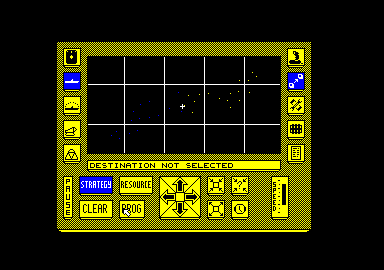
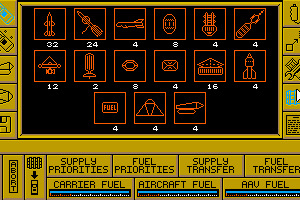
Contents. Plot Global Conquest is a strategy game where the object is to discover and conquer the world through strategy and management of and resources. The game always involves four opponents, which may be controlled by the computer or human players, and can be played via modem. The world is generated for every game, with the environment composed of oceans, plains, forests, swamps, or mountains, to which the players add units such as, and. Players start with, and can manufacture, a unit that can not only steal secrets but can see with wide-ranging eyes. A player's Comcen is the most powerful piece, and a player is out of the game upon losing the Comcen. A player's collection of cities, also known as burbs, creates units and must then financially support them with money dumped into the each turn.
As with Bunten's earlier game, Global Conquest is designed to. Random events are adjusted so that the player in first place is never lucky and the last-place player is never unlucky.
Reception In 1992 and 1994 surveys of science fiction games, gave Global Conquest four-plus stars out of five, stating that its 'main strength is modem play coupled with detailed military operations'. The magazine later named it one of 1992's best wargames. The game was reviewed in 1993 in #189 by Hartley, Patricia, and Kirk Lesser in 'The Role of Computers' column. The reviewers gave the game 4 out of 5 stars. References. ^ Lesser, Hartley; Lesser, Patricia & Lesser, Kirk (January 1993).
'The Role of Computers'. Dragon (189): 57–62. Computer Gaming World. Retrieved 3 July 2014. Evan (November 1992).
Computer Gaming World. Retrieved 4 July 2014.
Evan (May 1994). Computer Gaming World.
Computer Gaming World. November 1992. Retrieved 4 July 2014. External links. at. at. at.
at. at This –related article is a. You can help Wikipedia.
